

RCAH’s John Aerni-Flessner Publishes New Book on Southern Africa’s Water History
April 8, 2026
- John Aerni-Flessner released a new book on the history and impact of the Lesotho Highlands Water Project
- He connected Cold War politics, apartheid, and water infrastructure in Southern Africa
- His work centers on community understanding through its South Africa-based publication
By Jessica Watley | RCAH Senior Communications Intern

John Aerni-Flessner, associate professor in the Residential College in the Arts and Humanities at Michigan State University, has released a new book exploring one of Southern Africa’s most significant infrastructure projects.
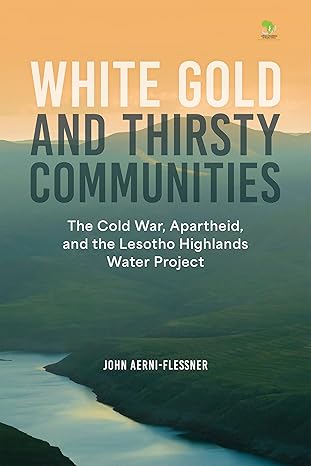
White Gold and Thirsty Communities: The Cold War, Apartheid, and the Lesotho Highlands Water Project offers a deeply researched account of how global politics, regional agreements, and local communities intersect through water. The book traces the decades-long development of the Lesotho Highlands Water Project, a major system that transfers water from Lesotho to South Africa, while also examining its uneven impacts on the people who live alongside it.
The project itself is both a feat of engineering and a reflection of historical tensions. Rooted in a 1986 treaty shaped by Cold War dynamics and apartheid-era politics, it continues to influence economic development, resource distribution, and everyday life across the region.
For Aerni-Flessner, the book represents more than an academic milestone—it is the culmination of years of personal and scholarly investment in Lesotho.
“This book is one I have wanted to write for a long time,” Aerni-Flessner reflected. “The project is of vital importance to Lesotho and South Africa, and to so many people in each country, and yet there are a lot of people who don’t really understand where the project came from.”
His decision to publish the book in South Africa underscores that commitment to accessibility and regional impact. By ensuring it is widely available there, Aerni-Flessner centers the communities most directly connected to the story—those whose lives are shaped by the promises and limitations of large-scale water infrastructure.
The book also speaks to a broader set of questions about development and equity. While the Lesotho Highlands Water Project delivers massive volumes of water—often referred to as “white gold”—many surrounding communities still face limited access to that very resource. This contradiction sits at the heart of Aerni-Flessner’s work, challenging readers to reconsider how success is measured in global development projects.
Developed in collaboration with scholars and water stakeholders in Lesotho, this work has already sparked conversations among academics, policymakers, and community advocates about the future of water governance in the region.
“It is so important for people in Southern Africa that I made sure to have its publisher be in South Africa,” Aerni-Flessner said. “The book is available widely across the country, and I even saw it in the airport bookstore on my way home from a trip to South Africa over spring break. It was an amazing moment!”
Ultimately, White Gold and Thirsty Communities is both a historical account and a call to attention—inviting readers to understand how infrastructure, politics, and people remain deeply intertwined.
Learn more about John Aerni-Flessner’s work:
White Gold and Thirsty Communities: The Cold War, Apartheid, and the Lesotho Highlands Water Project