

Finding the Beat in the Room with Cristian A. Lambaren Sanchez
April 9, 2026
- Cristian A. Lambaren Sanchez uses hip-hop and intentional teaching to build community and redistribute power in the classroom.
- He focuses on wellness, reflection, and unconditional support as integral parts of learning.
- Lambaren’s unique approach to education captures the creative and collaborative spirit of RCAH.
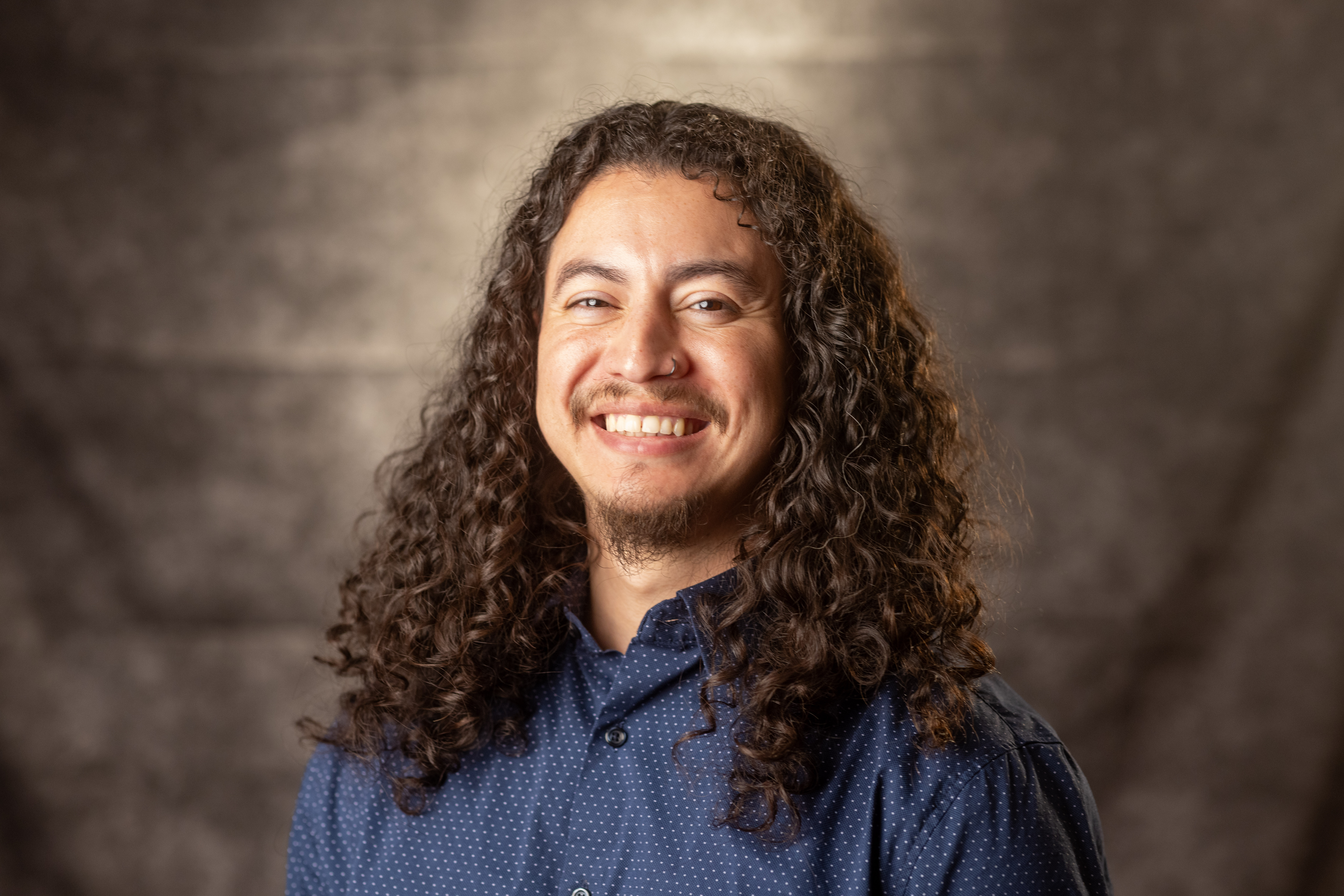
By Jess Watley ’27, RCAH Senior Communications Intern
In a quiet classroom tucked inside Snyder-Phillips Hall, Cristian A. Lambaren Sanchez begins his semester with a question: “What’s a song you’ve been listening to a lot lately?”
It’s the kind of question that might raise eyebrows in a different academic setting. Yet here it doesn’t feel forced at all. Instead, it becomes a prelude to his teaching. Lambaren will play a short instrumental piece (jazzy, loose, communal) and ask students to listen and meditate. In class, he then invites students to “remix”—a term he uses to get students to dig deeper—the question, “How might your life, your community, your voice matter in this class?”
Music is key to Lambaren’s pedagogical method. If RCAH had a theme song, Lambaren said, it would sound like the classroom he tries to build—collaborative, soulful, and improvisational. Something with a groove that welcomes everyone in. “Maybe something jazzy and instrumental,” he says with a smile. “Something that lets you feel all the different vibes at once.”
For Lambaren, teaching isn’t just about the exchange of information; it’s about redistributing power. “It’s about creating space where everyone has the freedom to bring their full self,” he says. Over time, he’s come to view teaching as a practice of intentionality—a craft that requires constant reflection, care, and openness to change.
At the Residential College in the Arts and Humanities (RCAH), those ideas resonate deeply in the courses Lambaren is teaching—such as RCAH 225: #Remixed = Hip-Hop + Community Engagement and RCAH 346: Humanistic Approaches to Learning and Teaching
—as well as in his community engagement efforts with students and RCAH’s community partnerships.
“RCAH students bring such passion,” Lambaren says. “There’s a kind of unconditional support here—people really see each other.” The connections formed in class often stretch far beyond it, shaping the way students see the world and their place in it.
“Cristian brings an incredible depth of creativity and curiosity to the RCAH community,” said RCAH Interim Dean Glenn Chambers. “His perspective as both a community member and scholar enriches the collaborative spirit that defines RCAH. We’re thrilled that he’s here and can’t wait to see the many ways he’ll continue to inspire our students and faculty alike.”
Hip-hop, Lambaren explains, offers a framework for understanding his teaching process. Created by young people as a way to voice both frustration and creativity, hip-hop has become a living archive of community expression. “Hip-hop gives us permission to remix—to take something and make it our own,” he said. In his courses, students study it not only as a cultural movement but as a philosophy: one that values authenticity, adaptation, and collaboration.
It’s also a way of exploring what community engagement really means. By looking at how hip-hop emerged from specific local contexts and grew into a global force, students begin to see parallels in their own experiences—how culture, art, and identity intersect. “It’s not just about music,” Lambaren said. “It’s about how people build together.”
Teaching, for him, is as much about wellness as it is about content. Lambaren integrates practices of reflection, gratitude, and creativity throughout the semester. “I think of it as building habits of care,” he says. Classes always open or close with short rituals—moments for students to breathe, write, or share something they’re grateful for. These small acts help students reconnect with themselves and with one another, especially when the semester grows heavy.
This attention to well-being feels especially necessary now. Between personal challenges and the wider world’s turbulence, students often carry unseen weight.
“We talk a lot about what it means to show up for each other,” Lambaren reflected. “Unconditional support isn’t just an idea. It’s something we practice.”
Learn more about RCAH faculty and their creative teaching practices at rcah.msu.edu.